

Understanding IRS Notice CP53E
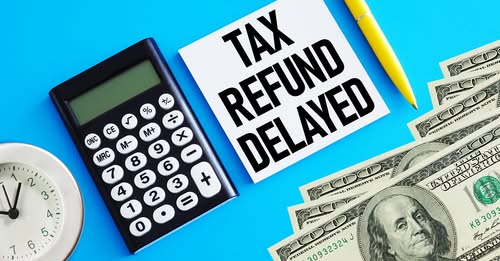
Executive Order 14247 requires federal disbursements, including income tax refunds, to migrate from paper to digital form. As can be imagined, this is causing some bottlenecks in receiving refunds. Through mid-March, 1.4 million refunds are stuck due primarily to this change. If this happens to you, you will receive an IRS Notice CP53E. Here is what you need to know.
The primary causes
No bank account. Your tax return did not have a direct deposit account noted.
Name mismatch. You file a joint tax return, but you have the refund’s direct deposit going to a bank account with only one name on it. Or the name on the bank account simply does not match the name on your tax return.
Bank rejection. For whatever reason, your bank rejects the deposit. Either you made an error on the account or routing number, or the bank simply rejects the transaction for some unknown reason.
What to do
Try to understand the error. Do this first, so that you know what action to take. Otherwise you run the risk of repeating the error and will not solve your problem.
30 days to respond. You have 30 days to respond to the notice by going to www.IRS.gov/CP53E. It will direct you to either create or log into your online account at the IRS called an IDme account. Then follow the instructions to correct the error.
Use Where’s my refund? This is a good online tool to track your refund even if you don’t receive a CP53E notice. You’ll need your Social Security number, the exact amount of your refund, filing status, and tax year. This can be found at: https://www.irs.gov/refunds
Wait. What the notice DOES NOT tell you is that if you don’t respond, the government will still issue a paper check. But it may take up to six weeks. In this case, double check your address to ensure it’s valid.
What NOT TO DO
Try to get the IRS to fix it. The IRS cannot take your bank account information over the phone. They will direct you to create or log in to your online account.
Get someone else to correct it. You unfortunately have to fix this one yourself. The IRS doesn’t want you to file an amended tax return to fix this problem. And you should not be providing access to your online account to anyone other than you.
Do nothing. If you do not receive your refund timely, take action. The problem could be unrelated to a direct deposit error. In this case the first place to start is using the Where’s My Refund? service.
A quick note on payments
If you owe money (instead of getting a refund) you can still pay using a paper check. This is not the government’s preferred method of receiving funds, but it’s still available to you.
This problem is so bad that the head of the U.S. Treasury Department and the Ways and Means Committee are making noise with the IRS to find solutions. So if you receive a notice, your sole consolation appears to be that you are not alone.
| Category: What’s New | Published: 04/10/2026 |
|---|
 Velisa Bookkeeping Services LLC