How Your Small Business Can Compete on an International Level

In the last 20 years, the opportunity to run your business on a global level has become much easier. No longer is international business only for mega-corporations. Now, small businesses can get in on a piece of the worldwide economic puzzle quite easily. In one survey, 58 percent of small businesses indicated they have at …

Continue reading How Your Small Business Can Compete on an International Level

IRS issues proposed regs. on 100% bonus depreciation

The IRS issued proposed regulations (REG-104397-18) providing guidance on Sec. 168(k), which was amended by P.L. 115-97, known as the Tax Cuts and Jobs Act (TCJA), to increase the allowable first-year depreciation deduction for qualified property from 50% to 100%. The TCJA extended and modified bonus depreciation, allowing businesses to immediately deduct 100% of the …

Continue reading IRS issues proposed regs. on 100% bonus depreciation

Qualified business income deduction regs. proposed

The IRS issued proposed regulations on Wednesday regarding the qualified trade or business income deduction under Sec. 199A, which was enacted by P.L. 115-97, the law known as the Tax Cuts and Jobs Act (TCJA) (REG-107892-18). At the same time, it issued Notice 2018-64, which provides guidance on how to compute W-2 wages for purposes …

Continue reading Qualified business income deduction regs. proposed

Proposed regs. address several transition tax issues

The IRS issued proposed regulations on Wednesday on the Sec. 965 transition tax, which was added to the Code by P.L. 115-97, the law known as the Tax Cuts and Jobs Act (REG-104226-18). Sec. 965 applies to the last tax year of a deferred foreign income corporation (DFIC) that begins before Jan. 1, 2018. The …

Continue reading Proposed regs. address several transition tax issues

Final rules govern adequate substantiation for charitable contributions

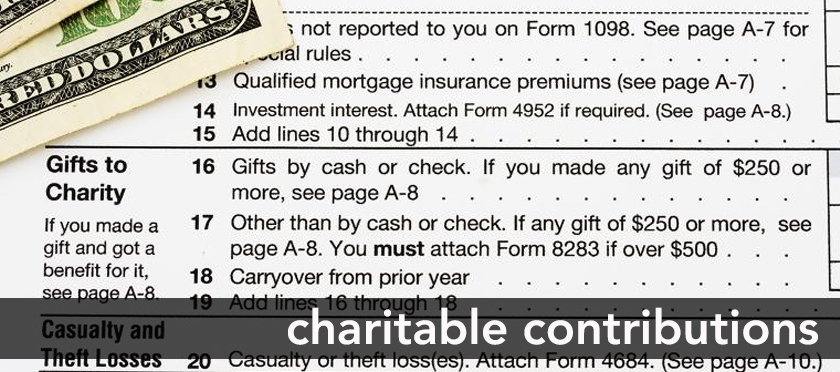
The IRS published final regulations that implement changes made by the American Jobs Creation Act of 2004, P.L. 108-357, and the Pension Protection Act of 2006, P.L. 109-280, to the substantiation and reporting rules for charitable contributions under Sec. 170 (T.D. 9836). The final regulations set forth the substantiation requirements for contributions of more than …

Continue reading Final rules govern adequate substantiation for charitable contributions

How Can You Make Your Small Business More Financially Stable?

These strategies take time, effort, and sometimes money to establish, but once built into the foundation of your small business, financial stability will be within reach. Small business owners and home service professionals often face a significant challenge in keeping their enterprises sustainable: financial stability. Without stability in your revenue and expenses, it becomes much …

Continue reading How Can You Make Your Small Business More Financially Stable?

IRA distribution to pay spousal support is taxable

The Tax Court holds that writing checks from funds distributed is not a transfer of an account interest incident to divorce. During the pendency of a divorce, a taxpayer was ordered by a family court to transfer funds to an individual retirement account (IRA) in his spouse's name. Where the taxpayer received a distribution of …

Continue reading IRA distribution to pay spousal support is taxable

Many tax-exempt organizations no longer need to list donor information

To alleviate the burden on tax-exempt organizations and the IRS, the Service announced, with the issuance of Rev. Proc. 2018-38, that it will no longer require most tax-exempt organizations to report the names and addresses of substantial donors. The change does not apply to purely public charities exempt under Sec. 501(c)(3) because they are required …

Continue reading Many tax-exempt organizations no longer need to list donor information

Strategies for minimizing estimated tax payments

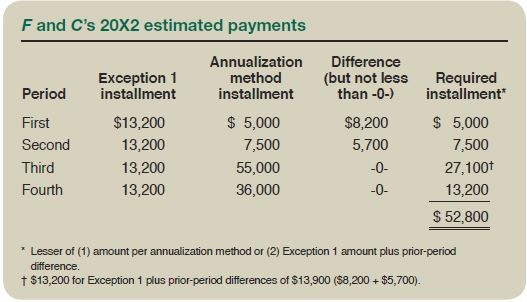
Taxpayers must pay their taxes throughout the year either through payroll withholding or by making quarterly estimated payments; otherwise, tax underpayment penalties are assessed. However, underpayment penalties are avoided if any of the following situationsapply: Small balance due after federal income tax withholding: The tax, after reducing it for federal income tax withheld, is less …

Continue reading Strategies for minimizing estimated tax payments